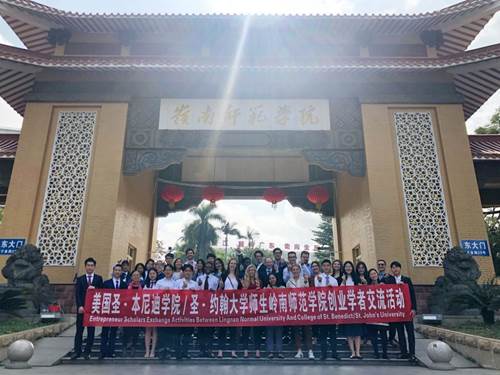
Group photo of Chinese and American teachers and students
A 16-people delegation headed by Kevin Thomas Clancy, Director of the Center for Global Education, and Kong Kaishan, Associate Professor at College of St. Benedict / St. John’s University of the United States visited Lingnan Normal University and attended Entrepreneur Scholars Exchange Activities on January 5-8. The two sides held a variety of academic and cross-cultural exchange activities, including in-depth discussions on 7 innovation and entrepreneurial programs under the analysis framework of “Business Model Canvas”, enterprise inspections with the theme of “the impact of the Trump administration’s tariff policy on China's export-oriented enterprises and countermeasures”, Chinese cultural experience, and interactive exchanges between students from both sides. Participating students said they learned a lot. Leaders from both sides also conducted in-depth discussions and reached consensus on a number of topics, such as the sustainable development and further progress of the program, and teacher and student exchange programs between the two universities. This also showed the efforts of our university's School of Foreign Studies to improve the professional level of students, expand their international vision, and cultivate international applied talents.
On January 6, 14 students majoring in Finance, International Economics and Finance, and Communication from the College of St. Benedict / St. John’s University, and 14 students majoring in Business English from the School of Foreign Studies of our university formed seven entrepreneurial teams to delve into entrepreneurial programs. The seven teams had in-depth discussions on entrepreneurial programs including “Lemon Drop popsicles” , “Venture out: A domestic cycling & hiking tour” , “Prod. By Slais” , “Hanna Lain Co.” , “Dog House” and “Aromic” in terms of strategic positioning, operating process and profit sources, major tasks in the product development phase and key indicators of products, as well as judgment and prediction of the current development situation and future development trends of products, using the “Business Model Canvas,” a tool and framework used by many start-ups and transforming companies to analyze business models, and considering the nine elements of core competencies, resource allocation, value proposition, distribution channels, target customers, partnerships, cost structures and profit models. During presentations of the entrepreneurial programs the next day, the seven Chinese and American teams presented their startups, respectively. Director Kevin Thomas Clancy, Associate Professor Kong Kaishan, Director of the Business English Department Lin Hai and the teacher Shi Haibin spoke highly of the entrepreneurial programs and on-site presentations of all the teams. They deemed that the programs were presented well with novel entrepreneurial models and promising market prospects.
During the enterprise inspections, Chinese and American teachers and students made research and inspection tours to Baosteel Zhanjiang Iron & Steel Co. and other companies and discussed with business people about how Chinese companies respond to the ongoing trade standoff between China and the United States. The two sides interacted warmly. Both Chinese and American teachers and students said that this exchange gave them a deeper understanding of the development of the industry of Zhanjiang and even China and that they benefited a lot.
The entrepreneur scholars exchange activities between our university and American university are featured by novel forms and a high degree of integration with professional studies, highlighting the elements of innovation and entrepreneurship. In a bid to better hold this event, the two sides have been in close communication since last September. Professor Paul, leader of the program on the American side, flew to our university in October and discussed with our university's Office of International Exchange and Cooperation and the School of Foreign Studies about how to design and organize the event in detail. The Business English Department of the School of Foreign Studies provided a number of business themes for the American side to choose from. During the activities, teachers and students from the U.S. also experienced the Chinese fancy dumpling making culture, jointly held recreational and sports activities with Chinese students, learned about the local history and culture of Zhanjiang, and left their mark on the southernmost tip of the Chinese mainland.
The Sino-US exchange activities have played a role in promoting more exchange activities between Chinese and foreign students in our university in the future. The School of Foreign Studies of our university will actively translate the results of learning and exchanges into specific ideas and measures, and promote the school to make new achievements in discipline construction, fostering of students’ innovation awareness, enhancement in students' entrepreneurial abilities, and training of high-quality international applied talents.
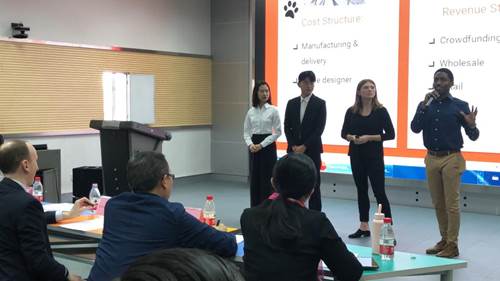
Entrepreneurial teams present their programs.
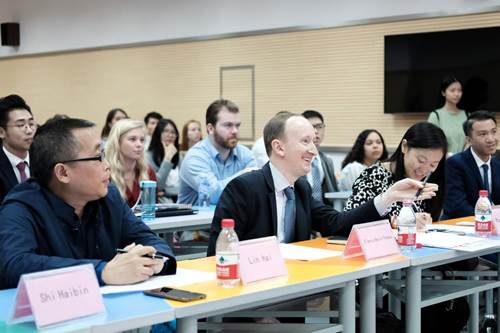
Chinese and American judges comment on entrepreneurial programs.
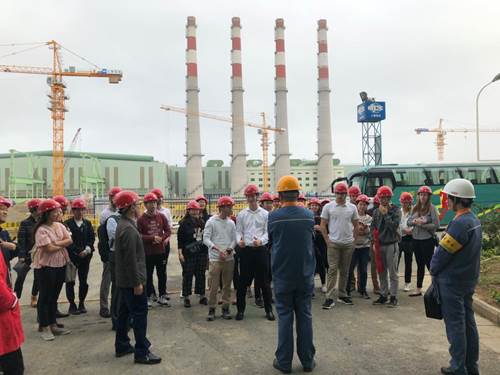
Teachers and students pay a field visit to Baosteel Zhanjiang Iron & Steel Co..



